


Essential
Active
Technical operation, security, session, consent, and basic interface preferences.
Detect vulnerabilities in real-time within VS Code. Centralize findings via API without ever uploading your full codebase. The hybrid architecture for high-velocity teams.



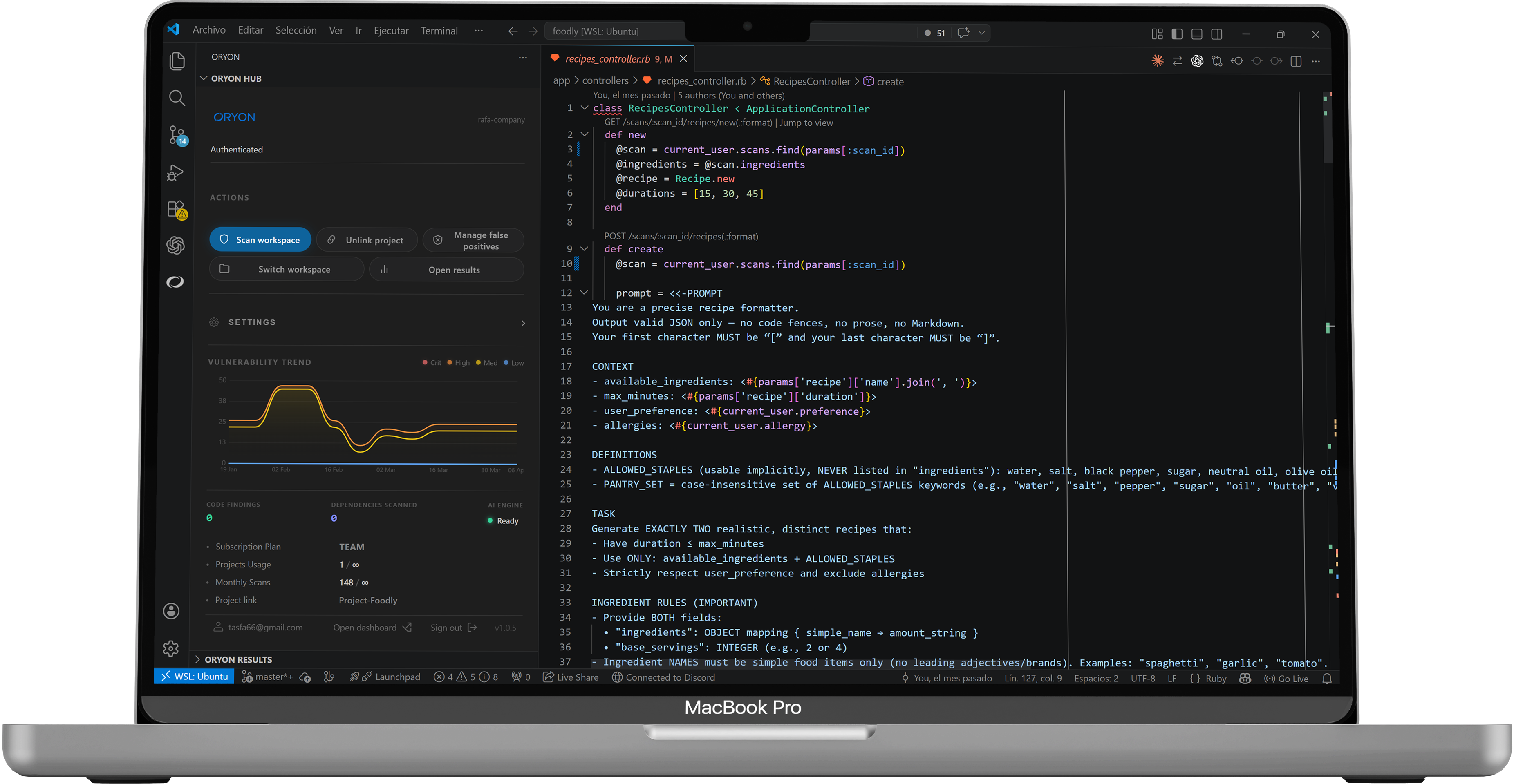
Our native extension transforms your IDE into a fortress. It's not a plugin; it's a co-pilot that scans your code locally and only uploads verified risks.
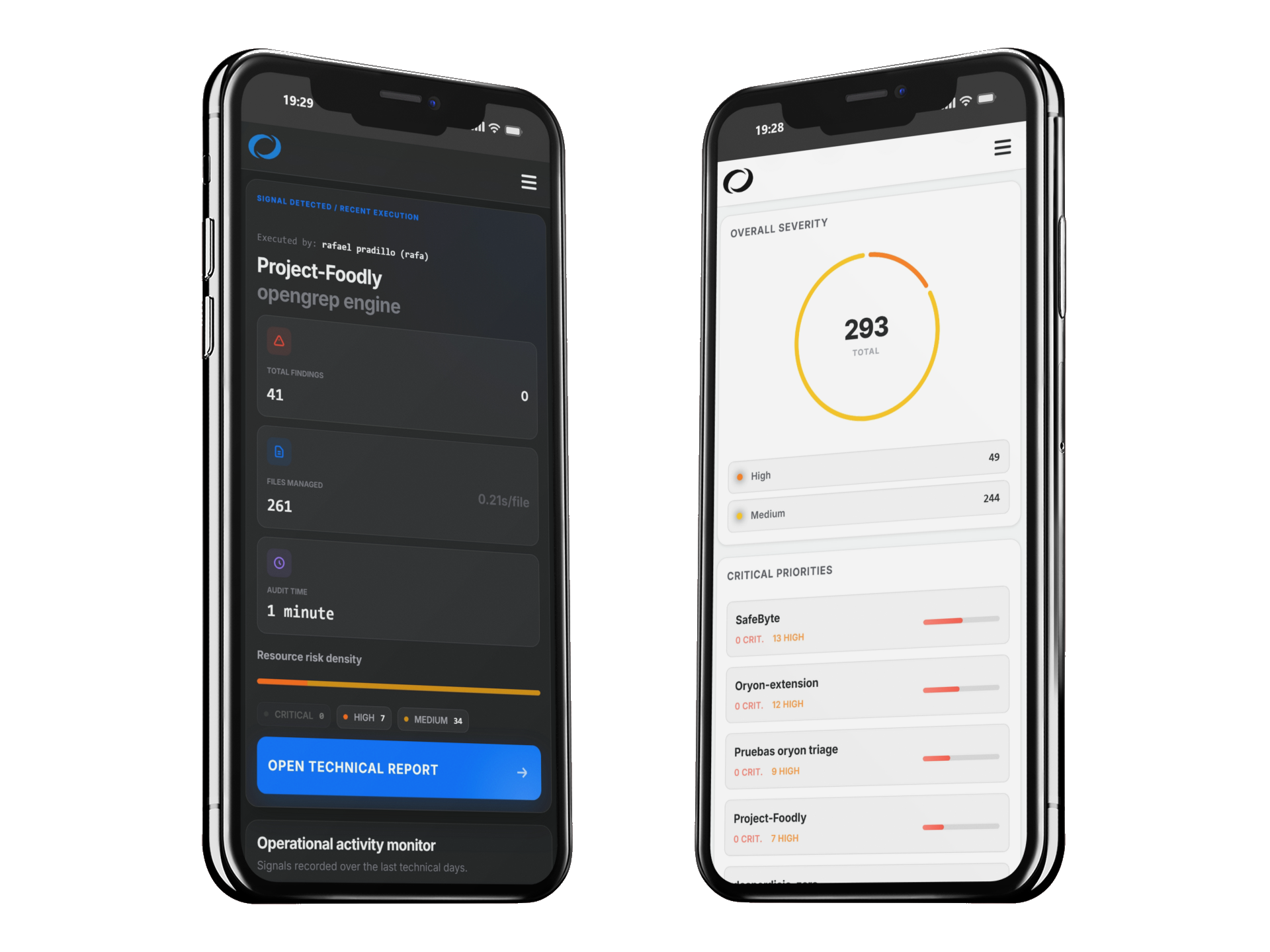
The dashboard and Web API turn local scans into a team system of record: projects, scans, findings, dependency vulnerabilities, shared suppressions, and KPIs in one multi-tenant system.
Project, scan, and suppression events remain traceable end to end.
Google, Magic Link, and SSO flows tied to company-scoped roles.
Projects, scans, and findings stay partitioned by company by design.
Create projects and scans or sync findings and dependency data from IDE or CI.
Ecosystem
Today the real product surface is VS Code, the Oryon dashboard and API, GitHub and GitLab workflows, enterprise auth, and the cloud or IaC formats already living in your repo.
Oryon starts in the IDE, reduces noise conservatively, and only syncs to the dashboard what deserves team-level follow-up.
The extension analyzes files while you edit or save, and full repositories on demand. It respects `.gitignore`, selects rules by stack, and combines code with dependency analysis.
Before anything is enriched or uploaded, Oryon applies shared suppressions, a heuristic prefilter, and a two-pass AI triage flow. If the system is unsure, the finding stays.
The findings that survive get enriched with local context, technical explanation, and remediation guidance. From results you can export, apply diff-based fixes, or open a GitHub or GitLab issue draft.
Once the repository is linked, the extension creates a scan, uploads findings and dependency vulnerabilities in bulk, and updates team visibility without turning the cloud into the scanning engine.